DEBBIE'S KIDNEY KAMPAIGN
Be a hero, save a life
Kidney Paired Donation Program
MORE THAN 3,100 REGISTERED PAIRS
In the U.S., more than 100,000 people are waiting for a kidney transplant, but only 17,000 of them will receive a kidney this year. Of those, only 6,000 come from living donors. The Alliance for Paired Kidney Donation is rewriting that story. You can help us bring this vision to life by becoming a living kidney donor, financial supporter or advocate for paired kidney donation.
How will my donation make a difference?
For many patients, living with kidney disease can feel like a hopeless endeavor. While dialysis can extend a patient’s life, the reality is not always bright. Treatment is costly and often takes a huge emotional toll on patients and their families. For some patients, the treatment extends life without providing additional quality of life.
Kidney transplants are proven to give recipients longer lives than dialysis can, with a higher quality of living. Transplantation not only saves lives, it helps recipients and their families truly live again.
How is paired donation different?
In the U.S., approximately 100,000 people are waiting for kidney transplants, but only 17,000 of them will receive one this year.
Paired donation creates a pathway for living donors and their incompatible recipients to find compatible matches. Paired donation breaks chains by making them. Living donors not only save lives, they help provide longer lives. On average, transplants from living donors increase survival rates by almost 12 years compared to those who receive kidneys from deceased donors.
Why should I become a living donor?
Choosing to donate a kidney is a serious and personal decision. While the benefits for the recipient are clear, the process is often a life-changing one for the donor as well. Donating a kidney means providing a higher quality of life for the transplant recipient and his/her family, which is an incredible gift to give. Some choose to donate because they know someone or are related to someone who needs a kidney. Others choose to because they know the need is great and the results are profound. No matter your reason, we encourage you to carefully weigh the benefits and risks and discuss them thoroughly with your family. Although only you can make the decision whether to donate, we are here to provide information, education and support.
Kidney Paired Donation, Making Incompatible Donors Work
Kidney paired exchanges are becoming very common and an exciting option for kidney recipient and donor pairs who are not compatible with each other. Previously, people with kidney failure who had an incompatible donor were not able to benefit from the transplant being offered to them. However, kidney paired exchange programs are having a significant impact on the expanding options of living kidney transplants. Paired exchanges are now allowing transplants to occur between incompatible donor pairs and in a few unique ways.
How Does a Paired Kidney Exchange Work?
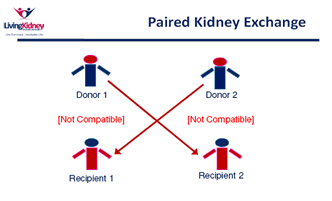
A kidney paired exchange consists of two or more donor/recipient pairs who are not compatible with each other. Kidney paired exchanges are a major breakthrough in living donations and are revolutionizing living donor transplants by eliminating incompatibility as a barrier to donation and providing a way for recipients and their incompatible donor to be paired with another incompatible recipient and donor.
In Pair 1, Donor 1 is not compatible with Recipient 1. In Pair 2, Donor 2 is not compatible with Recipient 2. However, Donor 1 is compatible with Recipient 2 and Donor 2 is compatible with Recipient 1. If you, your donor and the other pair are willing to participate in this “exchange,” a comprehensive evaluation process begins. The medical team will complete final medical tests and schedule the transplant on a date that works with everyone. Both transplants usually occur at the same day. This example used 2 pairs, but in fact any number of pairs is possible.
Compatible Paired Exchanges
Compatible donor/recipient pairs are being used to facilitate transplants with incompatibledonor/recipient pairs. This benefits the compatible donor/recipient pair if the recipient receives abetter HLA matched kidney, a kidney from a younger donor, or kidney that is a better size. The goal isto have all recipients benefit by participating in such an exchange. An ideal compatibledonor/recipient pair is one where the donor is a blood type "O", and the potential recipient is bloodtype "A", "B", or "AB".
Kidney Paired Exchange Programs
Many hospitals have their own kidney paired exchanges that they arrange within the incompatiblepairs at their hospitals. The nature of kidney paired exchanges is that the likelyhood of finding acompatible pair is increased when there are many incompatible pairs.